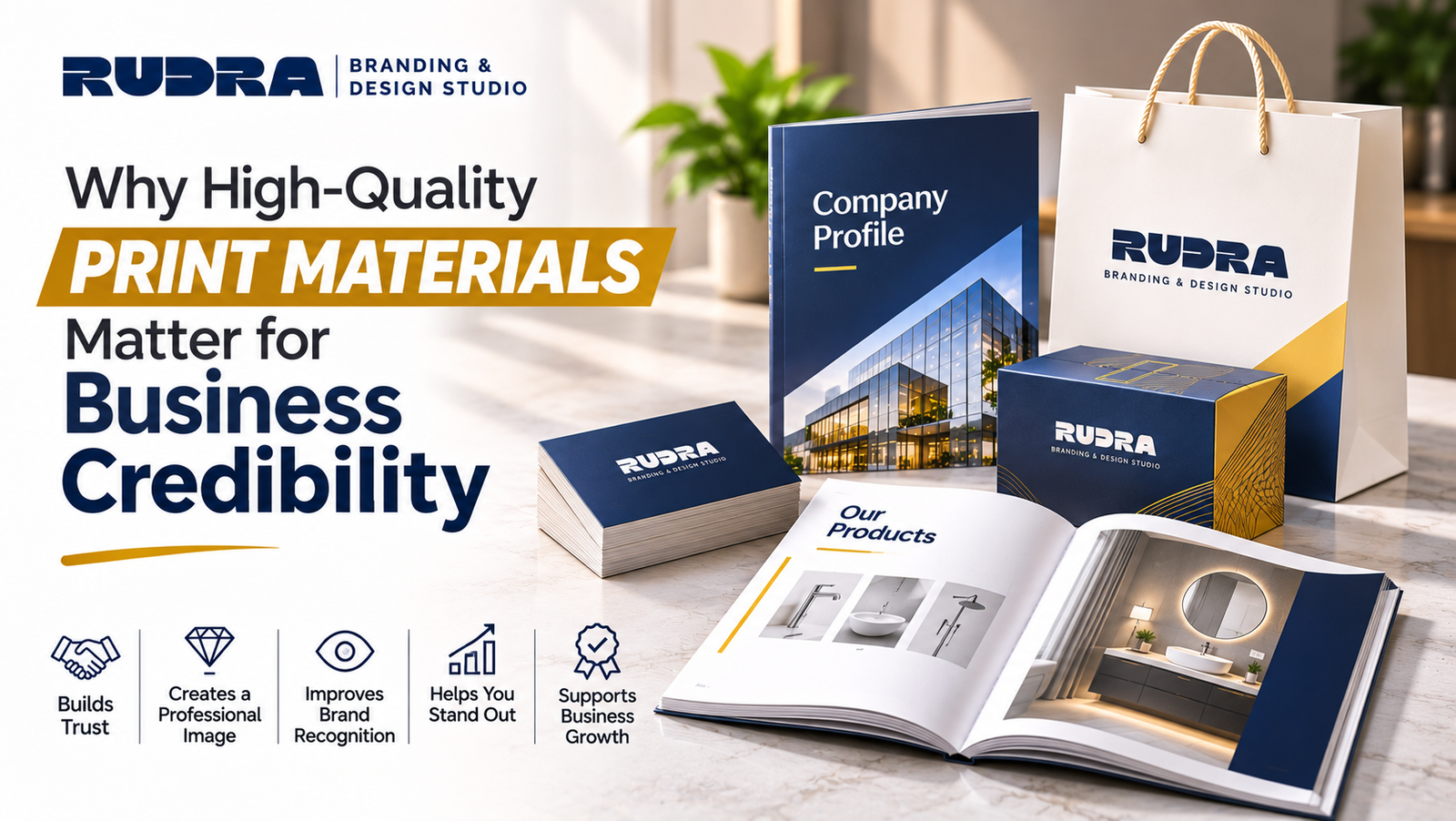
Business stationery is more than just paper with your company logo. It represents your business identity and helps create a professional impression whenever you communicate with customers, suppliers, business partners, or employees.
From business cards and letterheads to envelopes, folders, invoices, and notepads, professionally designed business stationery helps your company present itself with consistency and confidence.
In today's competitive market, every detail matters. Consistent stationery design can strengthen brand recognition, improve business communication, and help customers perceive your company as professional and trustworthy.
In this blog, we will explore how professional business stationery design helps build a strong brand image and why it is an important investment for businesses of every size.
What Is Business Stationery?
Business stationery includes printed materials used for everyday business communication, documentation, and professional interactions.
Common examples of corporate stationery design include:
- Business cards
- Letterheads
- Envelopes
- Company folders
- Invoice and quotation formats
- Notepads
- Compliment slips
- Presentation folders
- Employee ID cards
- Branded office documents
When these materials follow a consistent visual identity, they help create a recognizable and professional brand experience.
1. Creates a Strong First Impression
First impressions can influence how potential customers perceive your business.
When you hand over a professionally designed business card or send a branded quotation, you demonstrate attention to detail and professionalism.
Professional business stationery design communicates that your company takes its identity and business relationships seriously.
For example, a clean business card with a well-positioned logo, readable typography, and appropriate colours can create a stronger impression than a cluttered design.
How to achieve this:
- Use a professional logo.
- Choose readable fonts.
- Maintain a clean layout.
- Select suitable paper quality.
- Keep all stationery elements consistent.
Your stationery should communicate quality before the customer even reads the details.
2. Builds Brand Recognition
Brand recognition develops when customers repeatedly see consistent visual elements associated with your business.
Your logo, brand colours, typography, and graphic elements should remain consistent across all printed materials.
Professional brand identity design helps connect your stationery with your website, social media, brochures, packaging, and other marketing materials.
For example, when your business card, letterhead, envelope, and company profile use the same visual identity, customers can recognize your business more easily.
The key is consistency. Every printed material should feel like part of the same brand.
3. Makes Your Business Look More Credible
Customers often evaluate a business based on its overall presentation.
Inconsistent or outdated stationery can make a company appear less organized, while well-designed materials can support a more professional image.
Professional corporate stationery design helps businesses maintain a polished.
appearance during:
- Client meetings
- Sales presentations
- Vendor negotiations
- Business networking events
- Official correspondence
- Corporate events
Although stationery alone cannot guarantee customer trust, consistent and accurate business communication can contribute to a positive professional impression.
4. Improves Business Communication
Business stationery is not only about appearance. It also serves practical communication purposes.
A professionally designed letterhead, quotation format, or invoice template helps organize information and makes documents easier to understand.
For example, a branded quotation can include:
- Company name and logo
- Contact information
- Customer details
- Product or service descriptions
- Pricing
- Terms and conditions
- Payment details
Similarly, a professional letterhead provides a consistent format for official letters, announcements, and business correspondence.
Good stationery design combines functionality with visual appeal.
5. Creates a Consistent Corporate Identity
A strong brand should look consistent wherever customers interact with it.
If your business card uses different colours from your letterhead and your company profile follows a completely different style, your brand identity may appear fragmented.
A coordinated corporate branding system ensures that your stationery follows the same design standards.
Consider maintaining consistency in:
- Logo placement
- Brand colours
- Typography
- Margins and spacing
- Graphic elements
- Contact information
- Overall design style
This consistency makes your business appear more organized and helps create a unified brand image..
6. Makes Business Networking More Effective
Business networking is an important way to build relationships and generate referrals.
Whether you attend business meetings, exhibitions, conferences, or networking events, a professional business card helps people remember your company and contact you later.
An effective business card design should include:
- Your name
- Designation
- Company name
- Phone number
- Email address
- Website
- QR code, if useful
Keep the information clear and avoid unnecessary design elements.
A well-designed business card can also complement your company profile and other printed marketing materials during meetings.
7. Supports Your Marketing Activities
Business stationery can support your broader marketing strategy.
Although letterheads and envelopes are primarily used for communication, business cards and presentation folders can also reinforce your brand identity during sales and promotional activities.
For example, a combination of business cards, company profiles, brochures, and presentation folders can create a consistent brand presentation during client meetings and business proposals.
Professional marketing materials design helps ensure that every item communicates the same visual identity.
8. Shows Attention to Detail
Small details can influence how customers perceive a business.
A carefully designed stationery set demonstrates that your company considers presentation important.
Elements such as typography, spacing, paper quality, printing accuracy, and finishing contribute to the overall result.
For businesses that work with corporate clients, distributors, suppliers, or other organizations, these details can help create a more polished business experience.
However, professional stationery does not necessarily need to be expensive. A simple, well-organized design can be highly effective.
9. Helps Small Businesses Compete Professionally
Small businesses and startups may not have the same resources as large companies, but they can still present themselves professionally.
A consistent stationery system helps establish a clear identity from the beginning.
If you are launching a new business, consider starting with:
1. Professional logo design
2. Business card design
3. Letterhead design
4. Envelope design
5. Invoice and quotation templates
6. Company profile design
You can expand your stationery set as your business grows.
Investing in a consistent business branding approach helps create a professional foundation without requiring every possible marketing material immediately.
10. Choosing the Right Paper and Printing Quality
Design is important, but the final printed result also depends on paper and production quality.
Different stationery items have different requirements.
Stationery Item Paper or Material Considerations
Business cards Suitable cardstock with an appropriate finish
Letterheads Paper compatible with office printers and handwriting
Envelopes Appropriate paper weight and practical construction
Presentation folders Sturdy stock suitable for folding and holding documents
Notepads Paper suitable for writing
Compliment slips Paper selected to match the brand and intended use
Matte finishes, textured paper, and other premium options can be useful for certain brands, but they are not necessary for every project.
Choose materials based on your business requirements, brand positioning, budget, and intended use.
11. Common Business Stationery Design Mistakes to Avoid
To maintain a professional appearance, avoid these common mistakes:
- Using an outdated logo.
- Choosing too many fonts.
- Using inconsistent brand colours.
- Including incorrect contact information.
- Making text too small.
- Overcrowding the layout.
- Using low-resolution graphics.
- Ignoring print specifications.
- Selecting unsuitable paper.
- Using different design styles across stationery items.
Before sending stationery for printing, proofread all information and check the final artwork carefully.
12. How to Create Professional Business Stationery
Follow these steps to develop a consistent stationery system for your business.
Step 1: Establish Your Brand Identity
Finalize your logo, colours, typography, and visual style.
Step 2: Identify Your Requirements
Decide which stationery items your business needs most.
Step 3: Create a Consistent Design System
Use the same brand elements across business cards, letterheads, envelopes, and other materials.
Step 4: Prioritize Readability
Make contact information and important details easy to find.
Step 5: Select Suitable Materials
Choose paper and printing options according to the purpose of each item.
Step 6: Review Before Printing
Check spelling, contact details, alignment, colours, dimensions, and print specifications.
Following a structured process helps you create stationery that is attractive, practical, and consistent with your brand.
Why Choose Professional Business Stationery Design Services?
Creating professional stationery requires more than adding a logo to a template. It involves understanding your brand identity, organizing information, selecting appropriate typography, and preparing artwork for printing.
Professional business stationery design services can help your business create coordinated materials that reflect your identity across everyday communication.
At Rudra Graphics, businesses can explore graphic design and printing solutions for business cards, letterheads, envelopes, company profiles, brochures, catalogues, packaging, labels, stickers, and other marketing materials.
A consistent approach to design and printing helps your business maintain a professional appearance across different customer touchpoints.
Final Thoughts
Business stationery plays an important role in presenting your company professionally.
From business cards and letterheads to envelopes, folders, and branded documents, every item is an opportunity to reinforce your visual identity.
By investing in professional business stationery design, you can improve consistency, support business communication, and create a more recognizable brand image.
The most effective stationery combines a clear design, accurate information, appropriate materials, and consistent branding.
Build a consistent identity. Communicate professionally. Make every business interaction count.